AI Symptom Checker for Emergencies: Red-Flag Symptoms and When to Call 911
An AI symptom checker can help you decide whether a symptom needs a doctor today, a visit next week, or a 911 call right now — but it is a triage aid, not a diagnosis. When a true red flag appears — crushing chest pain, sudden trouble breathing, the drooping face of a stroke — you skip the app and call 911 immediately.
Outside of true emergencies, it’s worth understanding whether AI can replace a doctor and how to use a symptom checker before a visit.

This guide lists the red-flag symptoms that mean «emergency, not app,» explains how a well-built symptom checker screens for them before anything else, and shows exactly where the line sits between «check your symptoms» and «call 911 now.»
Medical disclaimer. An AI symptom checker is not a substitute for a licensed physician and does not provide a diagnosis. In a life-threatening emergency, call 911 (or your local emergency number) immediately. If you have any red-flag symptom listed below, seek immediate care — do not wait for or rely on an AI tool. When in doubt, contact a doctor or emergency services.
Red-Flag Symptoms: Call 911 Now, Not an App
Some symptoms are dangerous enough that typing them into any tool is a waste of the minutes that matter most. These are the red flags. If you or someone near you has one, call 911 or go to the nearest emergency room — an AI health assistant is the wrong tool for this moment.
The core red-flag list
Each item below means immediate emergency care. Do not open a symptom checker first; call 911.
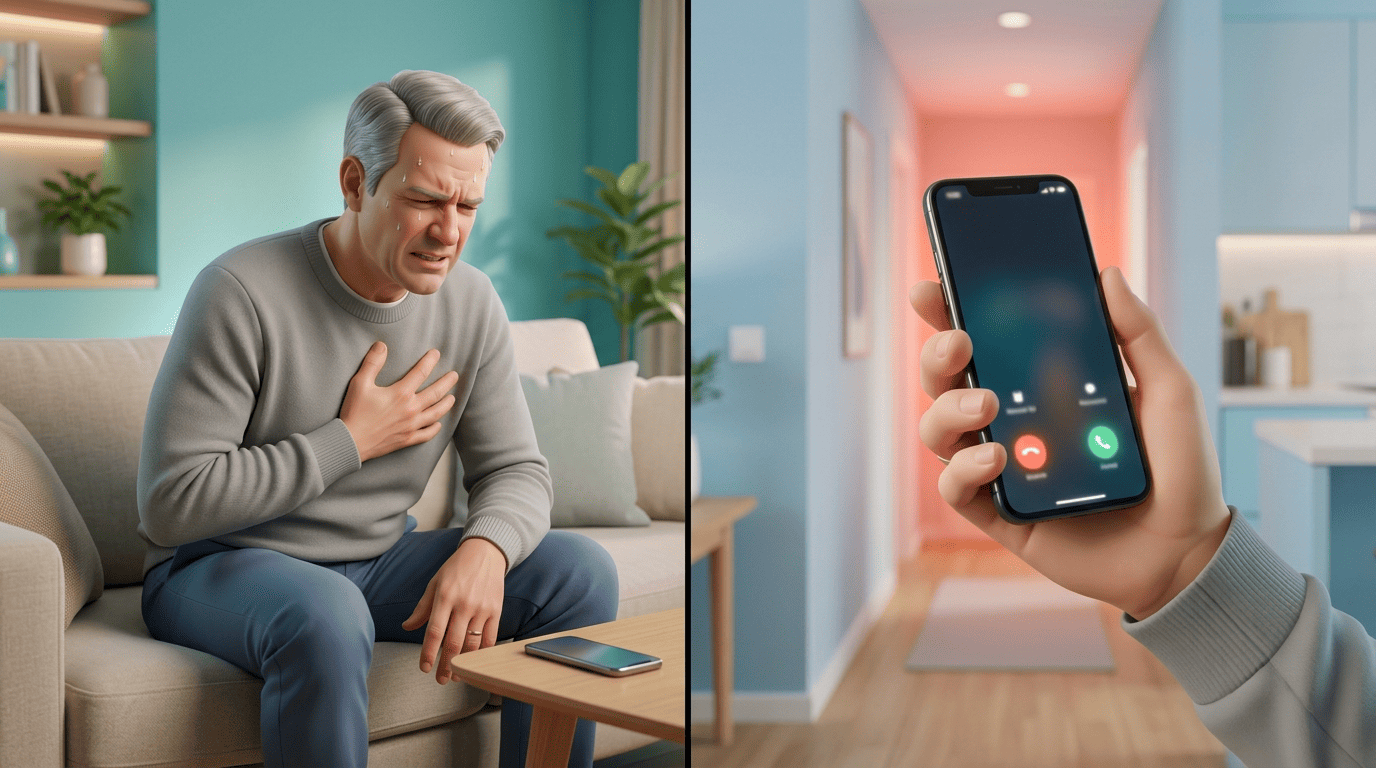
- Chest pain or pressure — squeezing, heaviness, or tightness lasting more than a few minutes, or spreading to the arm, neck, jaw, or back, especially with sweating, nausea, or shortness of breath. This can be a heart attack.
- Severe difficulty breathing — gasping, unable to speak a full sentence, or bluish lips or fingertips.
- Signs of stroke (FAST) — face drooping, arm weakness, or slurred speech (details below).
- Heavy bleeding that does not stop after about 10 minutes of steady pressure, or blood that is spurting.
- Anaphylaxis — swelling of the lips, tongue, or throat, widespread hives, or dizziness after an allergen or sting. Use an epinephrine auto-injector if available, then call 911.
- Loss of consciousness, or a seizure lasting more than 5 minutes, or a first-ever seizure.
- Sudden, severe headache — often described as «the worst headache of my life,» which can signal a brain bleed or aneurysm.
- Sudden vision loss, confusion, or trouble speaking, even without pain.
For any of these, the right response is a phone call to emergency services, not an app query.
Why these bypass the app
Red-flag symptoms are time-dependent. In a stroke, brain cells die every minute the blood supply is cut off; in a heart attack, muscle dies the longer an artery stays blocked. Clinicians summarize this as «time is brain» and «time is muscle.» Every second spent describing symptoms to software is a second not spent getting help. A symptom checker earns its keep on ambiguous, non-emergency complaints — a nagging cough, a rash, a headache you have had before — not on danger signs that are already obvious.
The FAST Test for Stroke: Memorize This One
Stroke is the emergency where fast recognition changes outcomes the most, and the four-letter FAST check is designed so anyone can spot it without training. It is worth committing to memory the way you know your own phone number.
F-A-S-T, letter by letter
F — Face drooping. Ask the person to smile. Does one side of the face droop or feel numb? A — Arm weakness. Ask them to raise both arms. Does one drift downward, or can they not lift it? S — Speech difficulty. Ask them to repeat a simple sentence. Is the speech slurred, strange, or hard to produce? T — Time to call 911. If any of these signs appear suddenly, call emergency services right away and note the time the symptoms started — that timing decides which treatments a hospital can safely give.
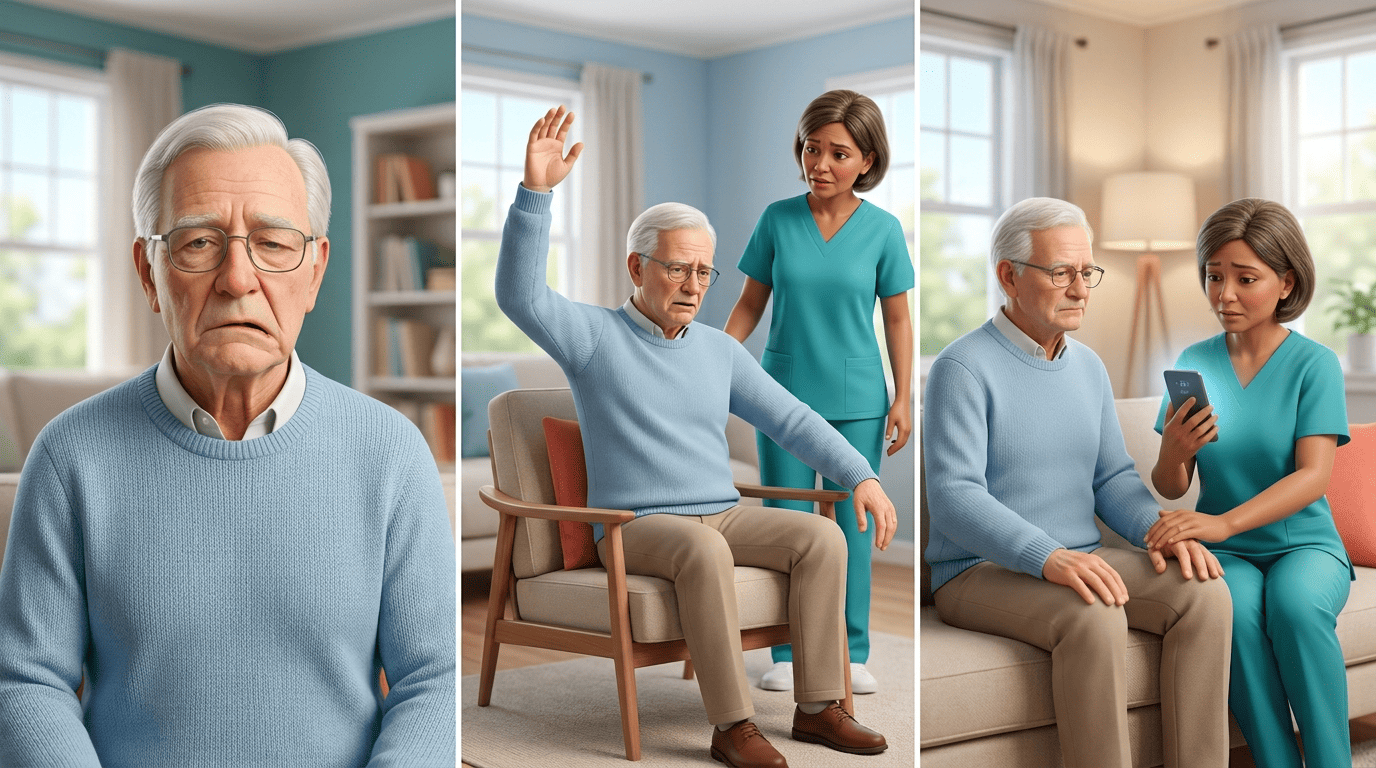
Beyond FAST, treat sudden numbness on one side of the body, sudden confusion, or sudden loss of balance or vision as stroke until proven otherwise. The American Stroke Association publishes the full warning-sign list and treatment window guidance.
How an AI Symptom Checker Handles Emergencies
A responsibly built AI symptom checker online does not simply answer whatever you type — it screens your input for danger before offering any assessment. Understanding this order of operations tells you what to expect, and where the tool’s usefulness ends.
Red flags first, then assessment
The safest tools scan your first message for emergency phrasing — «chest pain,» «can’t breathe,» «face drooping» — and, if they detect it, interrupt with a direct instruction to call 911 before running any analysis. A typical flow looks like this:
- You describe your symptoms in plain language.
- The tool asks clinically relevant follow-up questions.
- It checks for emergency red flags first, before scoring anything.
- It returns a structured assessment with an urgency level.
- You decide your next step, with a reminder to consult a clinician.
That «red flags first» step is the safety valve. If you want to explore how a modern AI symptom checker online structures this triage, the key point is that the emergency screen always comes before the differential — never after.

Triage, not diagnosis
Well-designed checkers act as decision support with clear risk stratification and safety-first escalation, not as a replacement for a clinician. Research consistently finds that symptom checkers are stronger at triage safety — steering you to the right level of care — than at pinpointing an exact diagnosis. Even certified tools reinforce this framing: Infermedica’s platform, which powers the Symptomate checker, is regulated as a Class IIb medical device under the EU MDR, with an ISO 13485-certified quality management system and multiple peer-reviewed validation studies, yet it is still positioned as support for clinicians, not a substitute for them.
Triage Levels: 911/ER vs Urgent Care vs Doctor vs Home
Most of the value in a symptom checker is helping you match a symptom to the right level of care. There are four, and knowing them prevents both dangerous under-reaction and costly over-reaction.
| Level | Timing | Typical situations |
|---|---|---|
| Emergency (911 / ER) | Immediately | Chest pain, stroke signs, severe breathing difficulty, heavy bleeding, anaphylaxis, loss of consciousness |
| Urgent care | Same day | High fever, moderate injuries, symptoms that can’t wait but aren’t life-threatening |
| Doctor appointment | Within 1–2 weeks | Ongoing or recurring non-urgent symptoms |
| Self-care at home | Monitor 24–72 hours | Mild, self-limiting conditions |
The stakes of getting this right are real. An estimated two-thirds of emergency-room visits could be handled in a lower-acuity setting, according to a 2019 UnitedHealth Group analysis, and the cost gap is wide — an average ER visit runs roughly $2,000 to $3,000 versus about $200 for urgent care, with ER waits commonly stretching to several hours. But those numbers never justify downgrading a genuine red flag to save time or money.
The golden rule of doubt
If you are unsure whether something is an emergency, treat it as one. Emergency services would far rather you call and turn out to be fine than hesitate during a real crisis. A trustworthy AI health assistant should reinforce that instinct — nudging you toward care when signs are worrying — and never talk you out of calling 911.
The single most important thing to know about symptom checkers is when not to use one. If the situation looks life-threatening, calling emergency services is always the right first move.
World Health Organization
Limitations: What an AI Symptom Checker Cannot Do
Even the best tool works from words on a screen, and that is a hard limit worth understanding before you lean on one.
It cannot examine you or replace clinical judgment
A symptom checker cannot examine you, run a blood test, or feel a tender abdomen — it offers possibilities, not diagnoses. Clinicians derive a large share of diagnoses from a careful patient history, but they combine that history with a physical exam and testing that no app can perform. The final diagnosis, and any treatment decision, requires a licensed professional with your full clinical context. Used well, an AI symptom checker helps you ask better questions and choose the right level of care — but for anything urgent, and certainly for any red-flag symptom, the answer is the same: seek immediate care and call 911.